📋 Contents
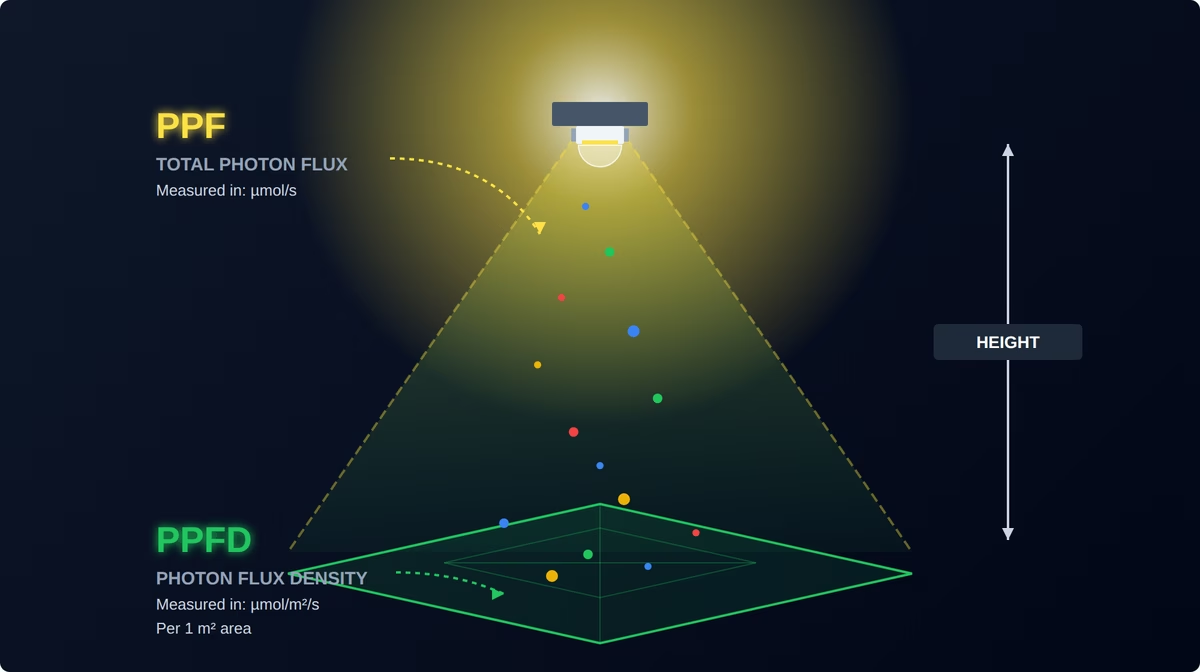
PPF (Photosynthetic Photon Flux) — is the total amount of photosynthetically active light emitted by a fixture per second in all directions. Measured in μmol/s.
PPFD (Photosynthetic Photon Flux Density) — is the density of the photon flux, or the amount of this light on a specific surface, typically at the plant canopy level. Measured in μmol/m²/s.
In short: PPF is how much light the fixture produces. PPFD is how much light the plant actually receives.
Why these are different things
PPF is a nameplate specification of the fixture. It is fixed and does not depend on where or how the lamp is installed.
PPFD depends on geometry: hanging height, beam angle, secondary optics, distance to the plant, and even the reflective properties of the grow tent walls. The exact same fixture with a fixed PPF can deliver a PPFD of 800 μmol/m²/s when hung at 30 cm, and only 300 μmol/m²/s at a height of 80 cm.
| Parameter | PPF | PPFD |
|---|---|---|
| What it measures | Total light output of the lamp | Light density on a surface |
| Unit of measurement | μmol/s | μmol/m²/s |
| Depends on hanging height? | No | Yes |
| Where it is measured | In a laboratory (integrating sphere) | At the leaf level (canopy) |
| What it is used for | Comparing fixture efficiency | Adjusting hanging height and lighting plan |
When choosing an LED grow light for plants, we highly recommend first reviewing the PPFD map.
How much PPFD does a plant need (average for light-demanding crops)
| Growth Stage | PPFD (μmol/m²/s) |
|---|---|
| Seedlings and clones | 100–300 |
| Vegetative phase | 400–600 |
| Flowering and fruiting | 600–900 |
| Peak requirements (tomatoes, cannabis) | 800–1200+ (with CO2 supplementation) |
The Bottom Line
PPF shows how much light a grow light or LED chip produces. PPFD shows how much light the plant actually receives. For the final result — vigorous growth and heavy blooming — PPFD is much more important, because this metric directly depends on the installation environment, not just the raw specs of the fixture itself.