📋 Contents
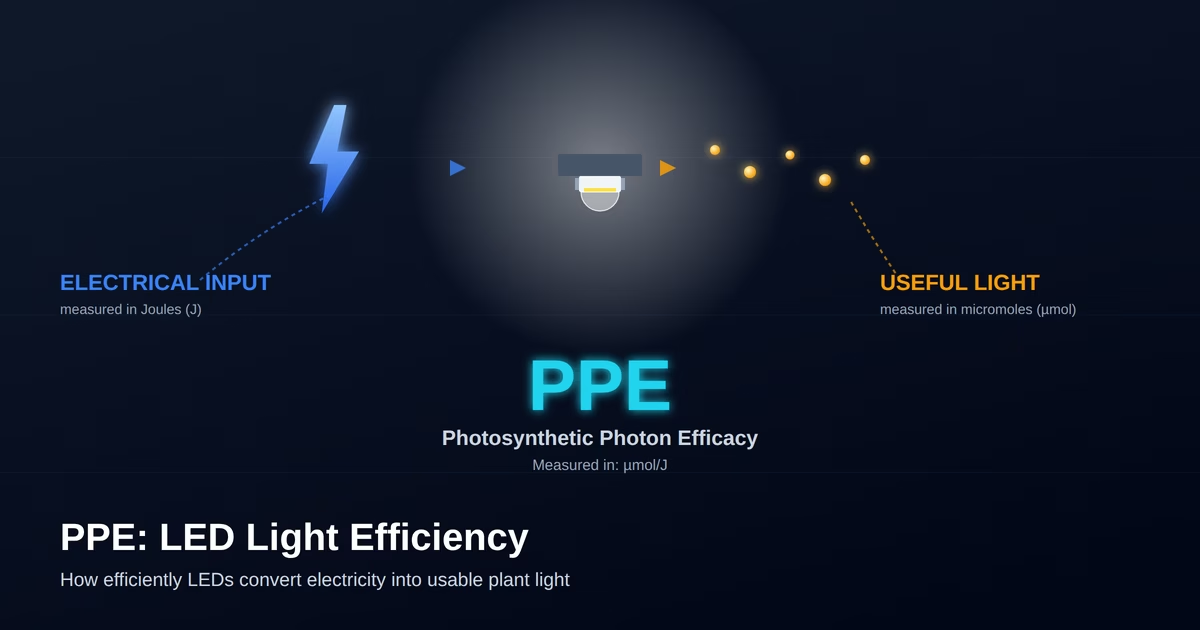
PPE (Photosynthetic Photon Efficacy) in the LED world is the energy efficiency of an LED, indicating how much useful light for photosynthesis (PAR) the LED produces for each Watt of electrical energy consumed. It is measured in μmol/J (micromoles per Joule).
Simply put, this metric answers the main question of any indoor farmer: "How much actual light will my plant receive for every kilowatt paid on the meter?"
1. Physics of the Process: Light vs. Heat
To understand the essence of μmol/J (micromoles per Joule), we must remember a basic law of physics: energy does not come from nowhere and does not disappear into nowhere. One Watt of electrical power equals one Joule of energy per second (1 W = 1 J/s).
When this Joule of electricity enters a light-emitting diode (LED), it splits into two parts:
- Light (Photons): useful PAR range energy that travels down to the plants and triggers the photosynthesis process.
- Heat (Infrared radiation / Chip heating): waste energy that heats up the fixture's heatsink.
The higher the PPE rating (the more micromoles of photons are generated from 1 Joule), the more efficiently the semiconductor inside the LED operates. In highly efficient LEDs, most of the energy is converted into light, while the heatsink remains relatively warm. In cheap LEDs and "220-volt space heaters"—electricity literally goes down the drain, heating the room while the plants receive a low amount of light.
2. PPE Benchmarks: How to Tell Good Light from Bad
Technology does not stand still. What was considered science fiction five years ago has become the standard today. Below is a table of approximate current efficacy values in the grow light market.
| PPE Value (μmol/J) | LED Quality | Where it is applied |
|---|---|---|
| 0.8 – 1.2 | Low (Outdated) | Cheap household LED bulbs, "flea market" grow lights, $3 220V matrices. Huge heat generation, minimal light output. |
| 1.4 – 2.1 | Medium (Standard) | Budget Quantum Boards from China, inexpensive COB matrices with a driver. Always require good cooling. |
| 2.5 – 3.0 | High (Premium) | Original Samsung LM301H, Osram Osconiq, Seoul Semiconductor LEDs. LED grow lights for professional growers. |
| 3.2 – 4.0+ | Ultra (Innovations) | The latest developments by top brands in laboratory conditions (at under-driven currents). The theoretical limit of white LEDs. |
3. The Economic Sense of High PPE
A fixture with a PPE of 2.8 μmol/J costs more than its 1.5 μmol/J counterpart. But this overpayment is an investment that pays off in the very first year of use. And here is why:
Let's assume your grow box needs a certain amount of light (a target PPFD). If you use fixtures with an efficacy of 1.5 μmol/J, you will have to hang a 500-Watt lamp. It will consume 0.5 kW per hour and generate an enormous amount of heat. You will have to build a good ventilation system to bring the temperature down (which will require even more electricity).
If you buy a premium fixture with an efficacy of 3.0 μmol/J, to achieve the exact same illumination level, you will only need a 250-Watt lamp. You will save 50% on your electricity bills, and thanks to the absence of waste heat, you can completely abandon a powerful ventilation system in favor of a simpler and cheaper one.
Summary
When choosing a grow light, pay attention to the μmol/J parameter. The wattage only shows how much power the fixture draws from the outlet. However, the PPE (Photosynthetic Photon Efficacy) rating proves how smartly it manages that electricity. Choose equipment with an efficacy no lower than 2.4 μmol/J so your plants grow fast while your electricity bills stay low.
Use our interactive calculator (widget) on this page to visually assess how the ratio of emitted light to heat changes depending on the PPE rating!
P.S. An important nuance: some sellers state the grow light's μmol/J parameter based on datasheet data for the LEDs used in the lamps they sell, which is incorrect. The real PPE of a grow light can only be obtained using an integrating sphere. It is impossible to calculate an average PPE for a lamp because manufacturers specify μmol/J in datasheets under ideal LED operating conditions, which are practically impossible to replicate in real-world lamps.